
Design Guide for License Plate Recognition (LPR/ANPR) Video Surveillance Systems
A comprehensive engineering reference for deploying evidence-grade LPR/ANPR systems across parking facilities, campuses, urban checkpoints, toll stations, and logistics gates. Covers capture chain design, architecture, security, integration, and O&M.
System Overview
A License Plate Recognition (LPR/ANPR) video surveillance system is a purpose-built, evidence-grade imaging and event system designed for entrances and exits of campuses and parking facilities, urban road checkpoints, toll stations, internal park roads, and logistics-gate scenarios. The system's primary objectives are high recognition rate, strong forensic value, event linkage and traceability, and stable operations with maintainability. Unlike general CCTV, LPR performance is dominated by the full capture chain: lens selection, mounting geometry, shutter and exposure strategy, illumination, triggering and time synchronization, network transport, storage and retention, and evidence chain management.
The scope of this guide includes: camera, lens, and illuminator selection; trigger devices (loop detector, radar, video trigger); time synchronization (NTP/PTP/GPS); edge and central compute for recognition; storage for images and video; and integration to gate, parking, ITS, and access control systems. Out of scope are face recognition for people, illegal surveillance, or systems that violate privacy laws — LPR is not a replacement for legal enforcement workflows.
System Architecture
The LPR system is organized into three functional layers — Field Layer, Edge/Access Layer, and Central Layer — each with distinct responsibilities in the capture-to-evidence pipeline.
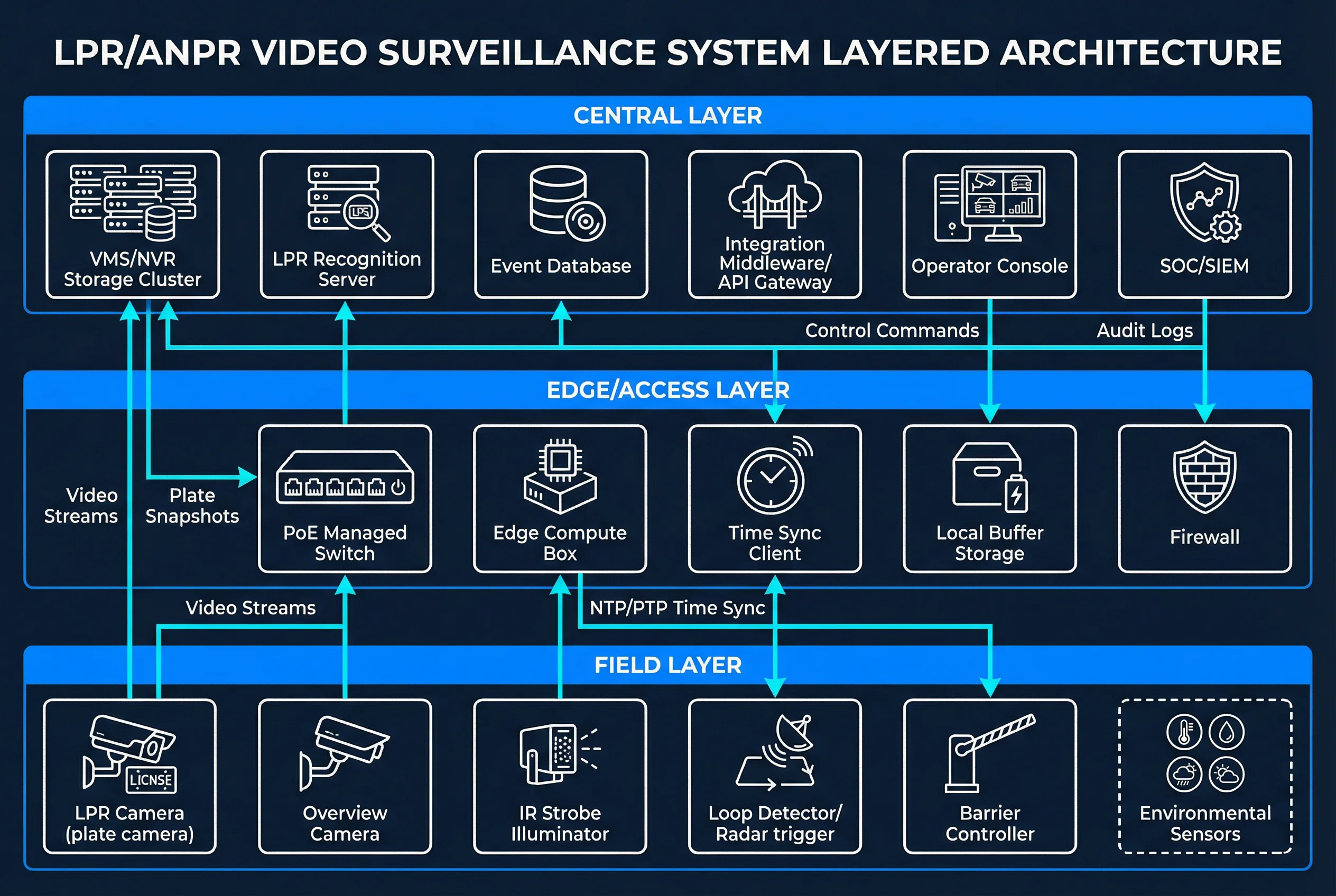
Figure 0.1: Overall LPR/ANPR system layered architecture — Field, Edge/Access, and Central layers with data flows
The Field Layer is responsible for stable capture, correct exposure, low motion blur, minimal reflections, and robust enclosures. The Edge/Access Layer handles secure transport, time accuracy, local buffering, VLAN segmentation, and power budget management. The Central Layer provides evidence-grade storage, search and retrieval, integration workflows, audit logging, and compliance management.
Main Functions
The LPR system delivers a set of tightly integrated functions that together form a complete evidence-grade surveillance solution. Each function contributes to the overall goal of reliable, accurate, and auditable plate recognition with seamless integration into downstream systems.
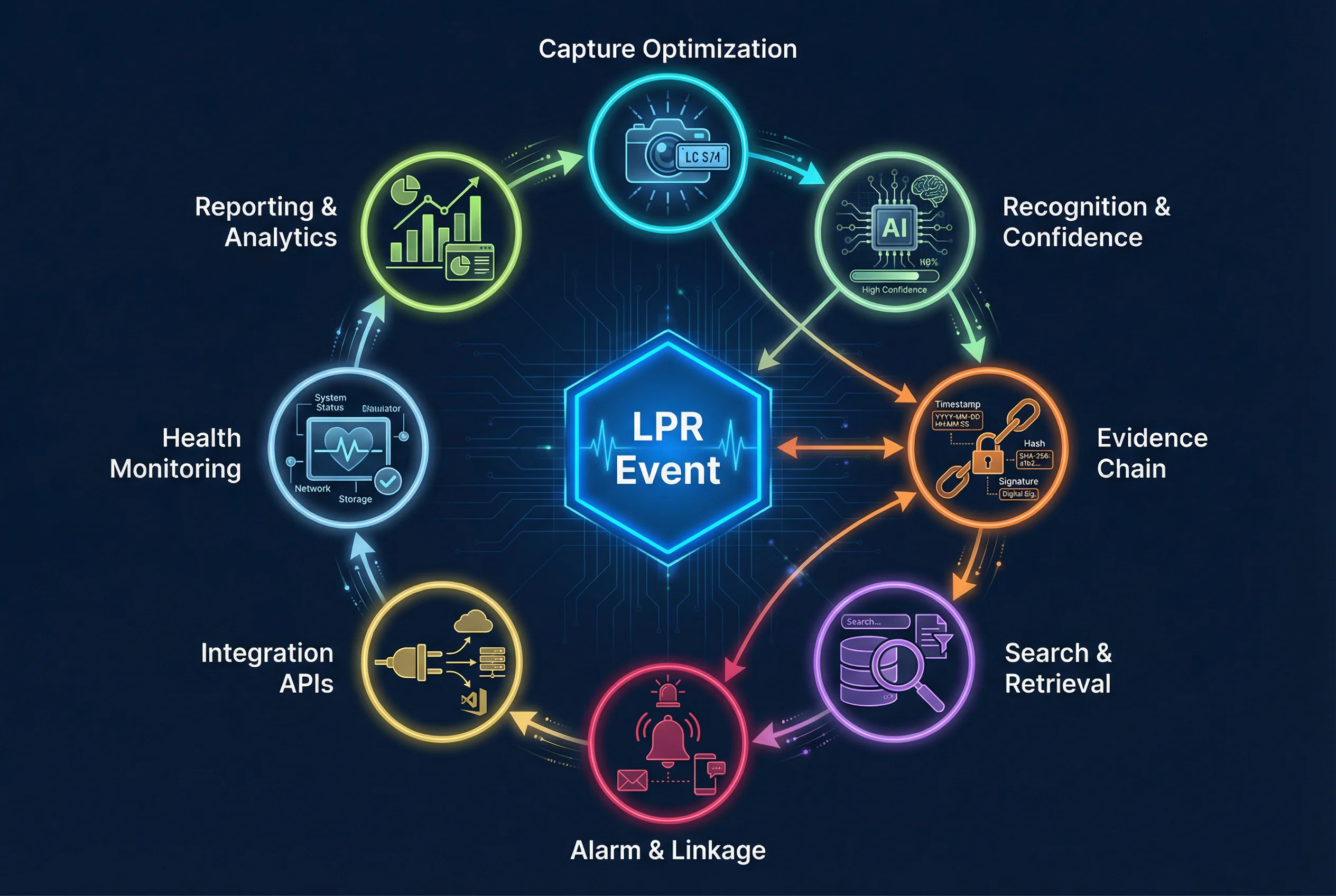
Figure 0.2: LPR system functional overview — eight core functional modules and their relationships
Chapter Navigation
This guide is organized into twelve chapters covering the complete lifecycle of an LPR/ANPR system from component selection through to ongoing operations and maintenance.